EN RO


#Exhibit of the Month

>>>

The main parts of the camera include the body, bellows, lens, and viewfinder system. The body consists of two lacquered walnut wood frames, joined by a folding black textile bellows that allows the necessary extension for focusing. On the front panel is the Agfa anastigmat lens, mounted in a Compur-type shutter produced by F. Deckel in Munich. It features a foldable "brilliant" viewfinder for both portrait and landscape orientation. It uses glass photographic plates coated with a photographic emulsion, mounted in walnut wood holders, with a frame size of 9x12 cm.
The walnut wood model, considered the flagship "Agfa Isolar Luxus," was designed by the A.H. Rietzschel factory in Munich, acquired by AGFA in 1925, which continued producing this type of camera under its own name until the late 1920s.
The piece was restored by Mihail Culașco, Restoration Department of NMHM.
Brief History of the Camera
The history of the camera spans 200 years, evolving from the camera obscura to today's digital devices. Key milestones include: the first permanent photograph in 1826 by French physicist Joseph Nicéphore Niépce, using a wooden box and a plate coated with bitumen of Judea; the invention of the first photographic process - daguerreotype - in 1839 by Frenchman Louis Daguerre, marking the official birth of photography; the invention of calotype, based on the negative/positive principle, by British physicist and chemist Fox Talbot; the invention of wet collodion plates by Englishman Frederick Scott Archer and dry glass plates by Richard Leach Maddox and John Huds Bennet; the introduction of flexible roll film and the launch of the first Kodak camera by American inventor George Eastman; the release of the first 35 mm film camera by German company "Leica"; the launch of the first instant camera "Polaroid," invented by American Edwin Land. Finally, starting in 1975, this path led to the digital photography revolution. Each successive step made cameras smaller and faster, significantly improving image quality.
The first photographic studio in Chișinău was opened in 1854 by Eduard Glewski, and before World War I, there were already about 100 photography studios in Bessarabia.
The collection of the National Museum of History of Moldova includes over 30 cameras, made in Austria, Germany, France, USSR, Japan, and China, dating from the late 19th century to the 2000s. Among them are folding bellows cameras, BOX-type cameras, single-lens reflex (SLR) and twin-lens reflex (TLR) cameras, as well as digital (DSLR) cameras.

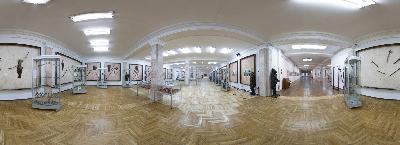
Virtual Tour


Exhibitions

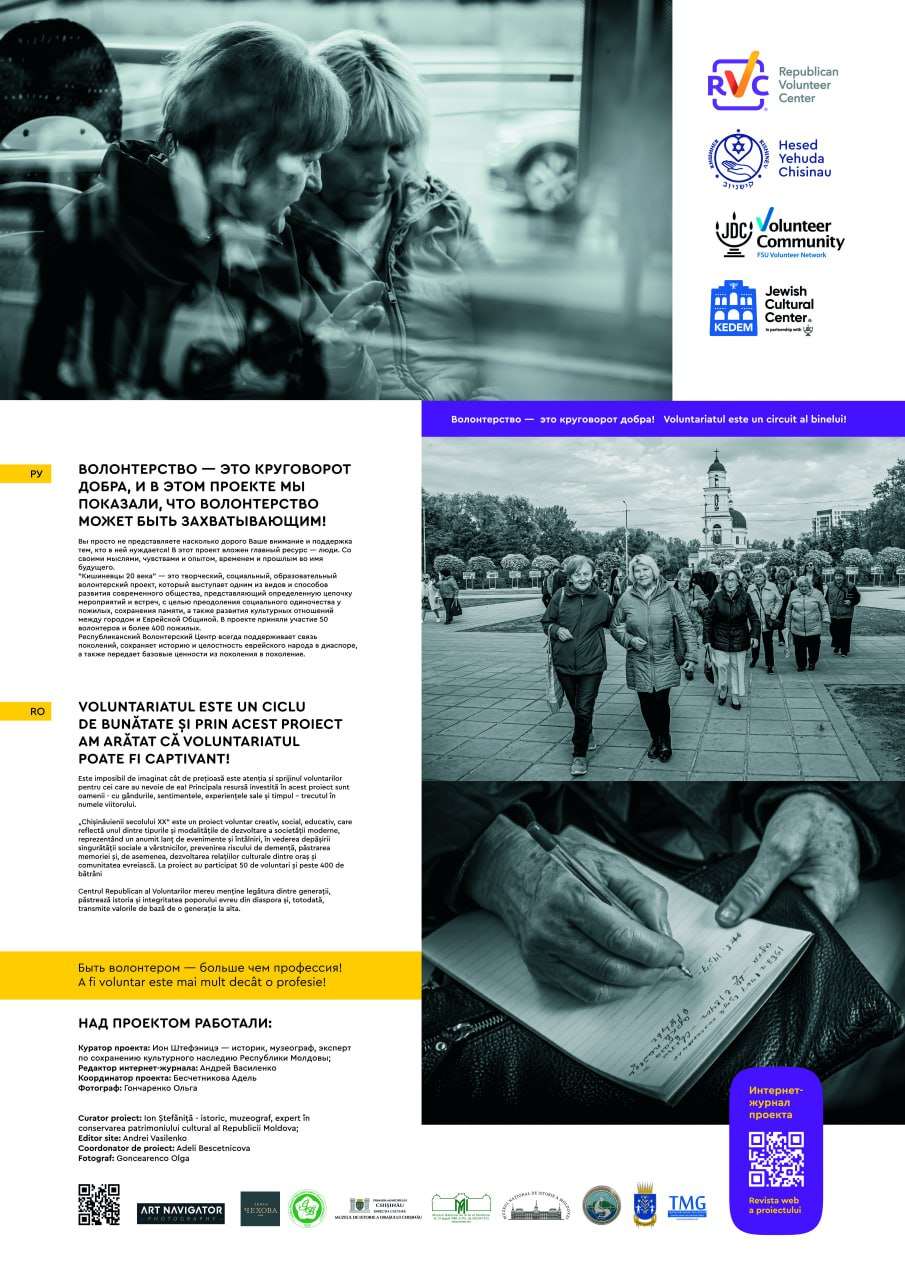
"Chisinau people of the 20th century"

17 – 31 July 2023

"Chisinau people of the 20th century" is a social and educational volunteer project, implemented by the RVC Republican Volunteer Center, which aims to develop contemporary society. It includes a series of events and meetings that help overcome social loneliness in the elderly, preserve memory and develop cultural ties between the city and the Jewish community.

This project became the starting point for an alternative form of volunteering in our country and developed various approaches to adapt the professional skills of volunteer participants.

During the year, 50 volunteers and over 400 elderly people participated in the project. As part of the activities related to the "Chisinau people of the 20th century", the "Let's go to the Museum" project was carried out in collaboration with the HESED Day Center with the support provided by the National Museum of History of Moldova, the "Alexei Șciusev" Memorial House in Chisinau, the National Museum of Arts of Moldova, the National Museum of Ethnography and Natural History, the "Aleksandr Pushkin" House-Museum, the History Museum of the City of Chisinau, the Museum of the State University of Moldova, the Botanical Garden of the State University of Moldova, the State Russian Drama Theater " Anton Cehov" and the excursion route in Chisinau offered by TMG.

Events and meetings were held on a voluntary basis, with the participation of lecturers who are well-versed in the history of the city, while the elderly shared their personal experiences and memories from their youth.

As a result, we present to the general public an exhibition of photos containing a QR code http://rvc20.tilda.ws/ on an online magazine of stories and quotes collected by volunteers during the past year and invite everyone to join the project in 2023. Each of us has the opportunity to be good and help others. This is the only way we can make the world more beautiful.

The photo exhibition "Chisinau people of the 20th century" can be seen between July 17 - 31, 2023, on the fence of the National Museum of History of Moldova, Chisinau, 31 August 1989 street, 121A.


Independent Moldova
Moldavian Soviet Socialist Republic
Bessarabia and MASSR between the Two World Wars
Bessarabia and Moldavian Autonomous Soviet Socialist Republic in the Period between the Two World Wars
Revival of National Movement
Time of Reforms and their Consequences
Abolition of Autonomy. Bessarabia – a New Tsarist Colony
Period of Relative Autonomy of Bessarabia within the Russian Empire
Phanariot Regime
Golden Age of the Romanian Culture
Struggle for Maintaining of Independence of Moldova
Formation of Independent Medieval State of Moldova
Era of the
Great Nomad Migrations
Early Middle Ages
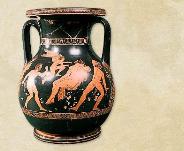
Iron Age and Antiquity
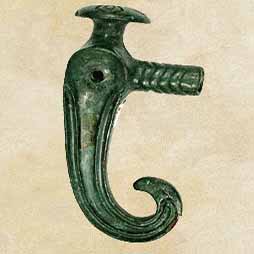
Bronze Age
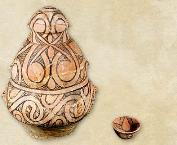
Aeneolithic Age
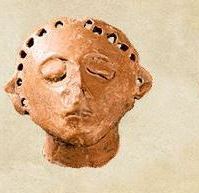
Neolithic Age
Palaeolithic Age


Come to Museum! Discover the History!
  
Visit museum
Visit museum
Summer schedule: daily
10am – 6pm.

Winter schedule: daily
10am – 5pm.
Closed on Mondays.
Entrance fees:  adults - 50 MDL, Pensioners, students - 20 lei, pupils - 10 MDL. Free access: enlisted men (...)

WiFi Free Wi-Fi Zone in the museum: In the courtyard of the National History Museum of Moldova there is Wi-Fi Internet access for visitors.


#Exhibit of the Month

The main parts of the camera include the body, bellows, lens, and viewfinder system. The body consists of two lacquered walnut wood frames, joined by a folding black textile bellows that allows the necessary extension for focusing...

Read More >>


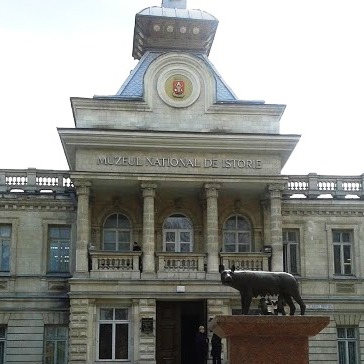
The National Museum of History of Moldova takes place among the most significant museum institutions of the Republic of Moldova, in terms of both its collection and scientific reputation.
©2006-2026 National Museum of History of Moldova
Visit museum 31 August 1989 St., 121 A, MD 2012, Chisinau, Republic of Moldova
Phones:
Secretariat: +373 (22) 24-43-25
Department of Public Relations and Museum Education: +373 (22) 24-04-26
Fax: +373 (22) 24-43-69
E-mail: office@nationalmuseum.md
Technical Support: info@nationalmuseum.md
Web site administration and maintenance: Andrei EMILCIUC


The National Museum of History of Moldova takes place among the most significant museum institutions of the Republic of Moldova, in terms of both its collection and scientific reputation.
©2006-2026 National Museum of History of Moldova
Visit museum 31 August 1989 St., 121 A, MD 2012, Chisinau, Republic of Moldova
Phones:
Secretariat: +373 (22) 24-43-25
Department of Public Relations and Museum Education: +373 (22) 24-04-26
Fax: +373 (22) 24-43-69
E-mail: office@nationalmuseum.md
Technical Support: info@nationalmuseum.md
Web site administration and maintenance: Andrei EMILCIUC

menu
The National Museum of History of Moldova takes place among the most significant museum institutions of the Republic of Moldova, in terms of both its collection and scientific reputation.
©2006-2026 National Museum of History of Moldova
Visit museum 31 August 1989 St., 121 A, MD 2012, Chisinau, Republic of Moldova
Phones:
Secretariat: +373 (22) 24-43-25
Department of Public Relations and Museum Education: +373 (22) 24-04-26
Fax: +373 (22) 24-43-69
E-mail: office@nationalmuseum.md
Technical Support: info@nationalmuseum.md
Web site administration and maintenance: Andrei EMILCIUC